- 2008 Group Show
- Morgan Allender
- Santina Amato
- Rob Bartolo
- Robyn Burgess
- Deidre But-Husaim
- Marcel Cousins
- Tony Cran
- Carly Fischer
- Chris Humphries
- Cassandra Laing
- Dane Lovett
- Stefan Marx
- Gretchen Mercedes
- Abbey McCulloch
- Laith McGregor
- Tim Moore
- Shannon Peel
- Toby Richardson
- Sam Shmith
- Britt Salt
- Jacqui Stockdale
- Jennifer Tyers
Sam Shmith
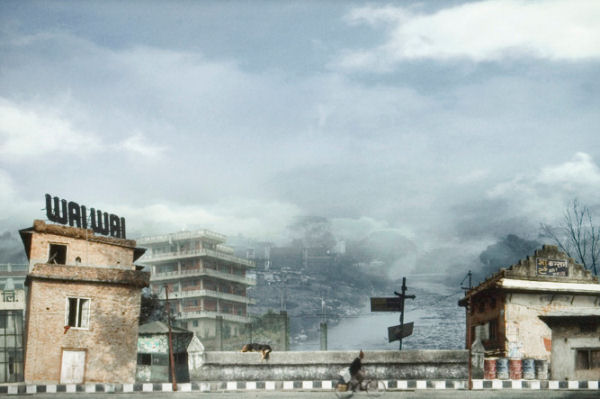
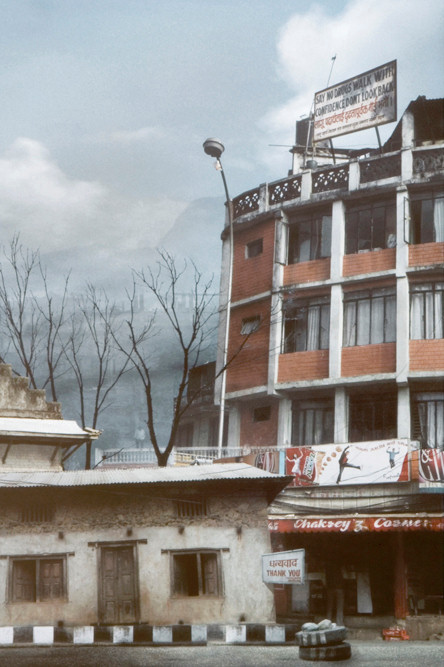
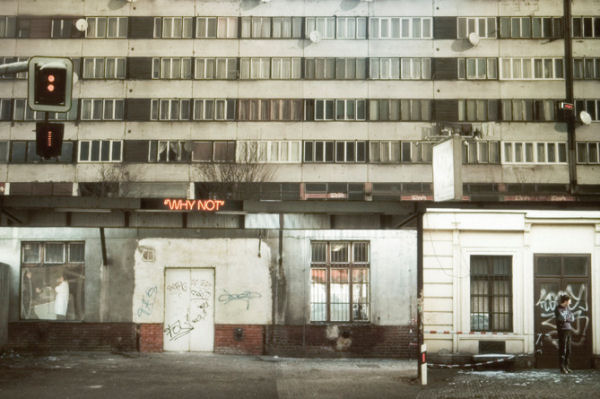
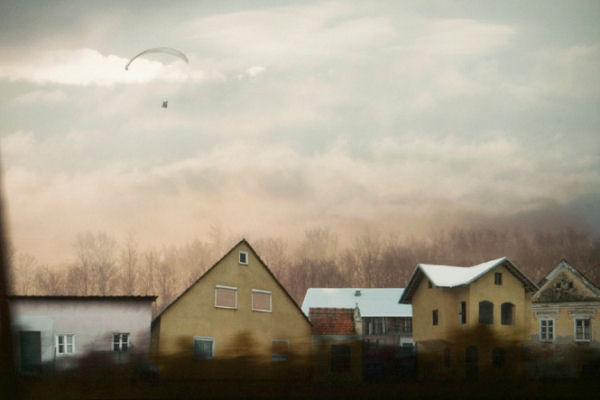
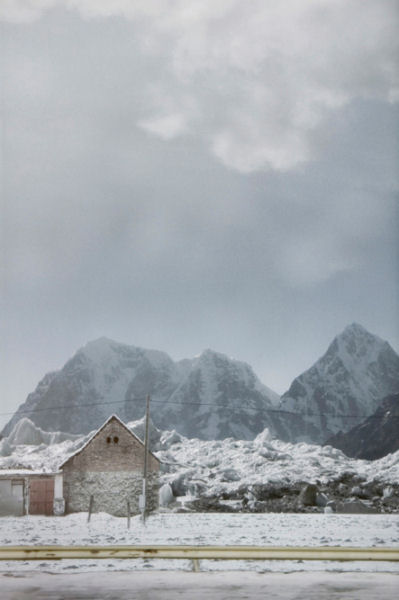
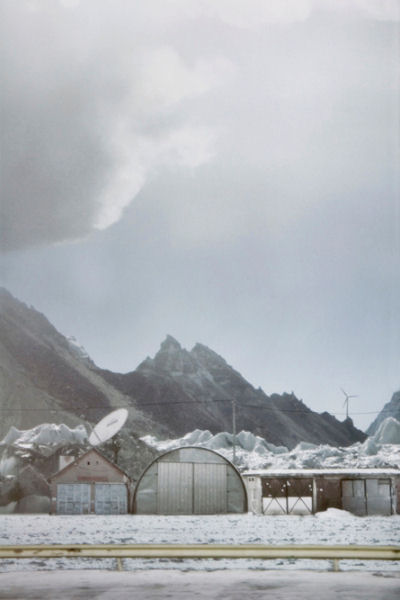
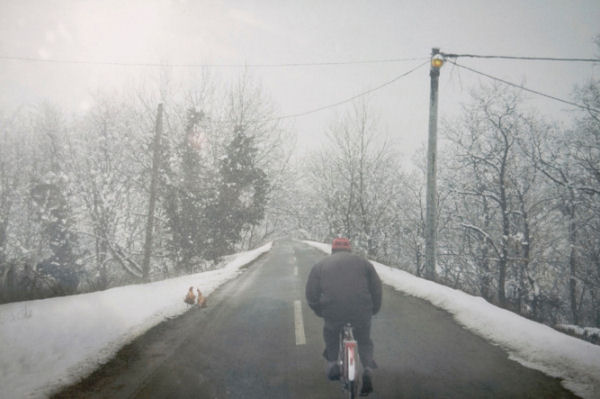
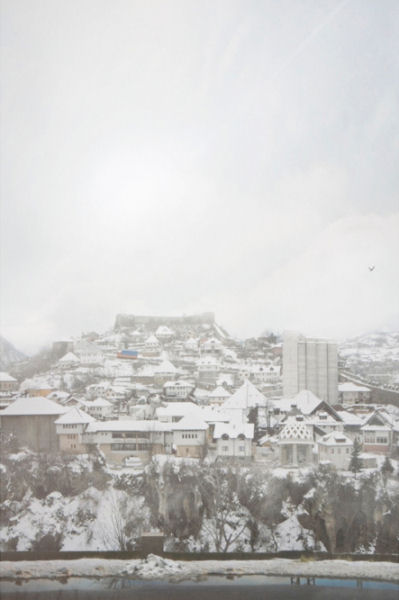
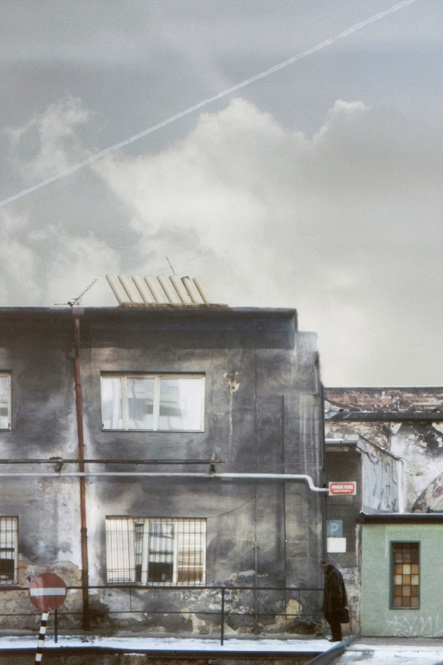
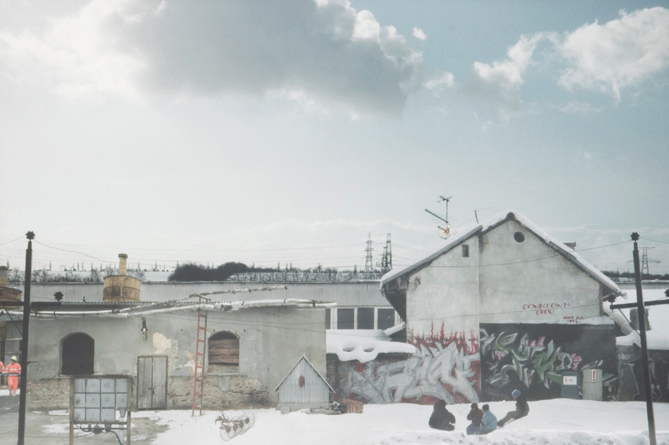
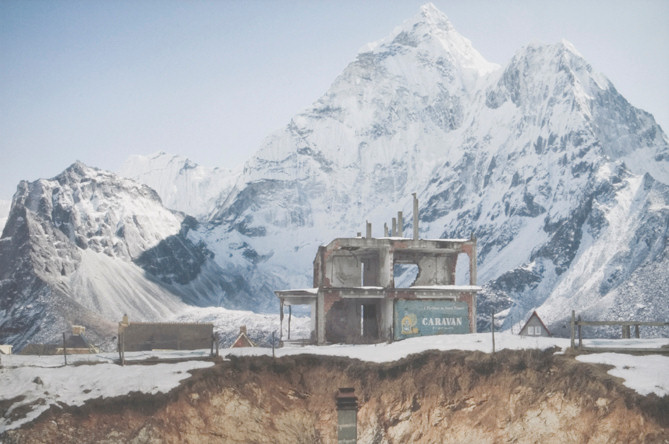
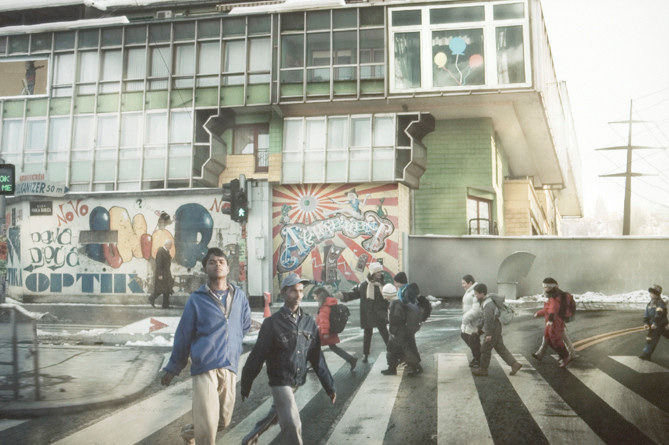
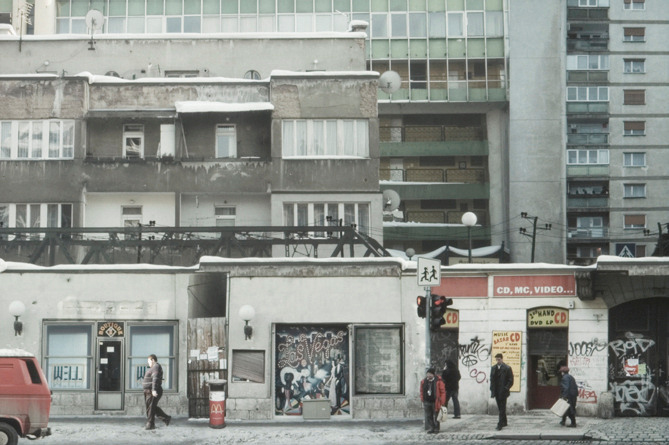
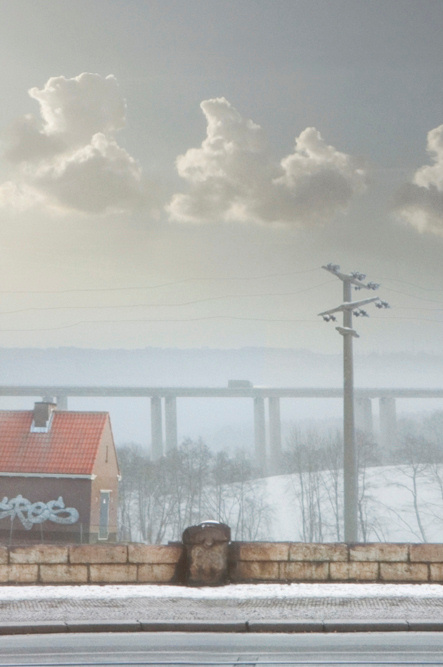
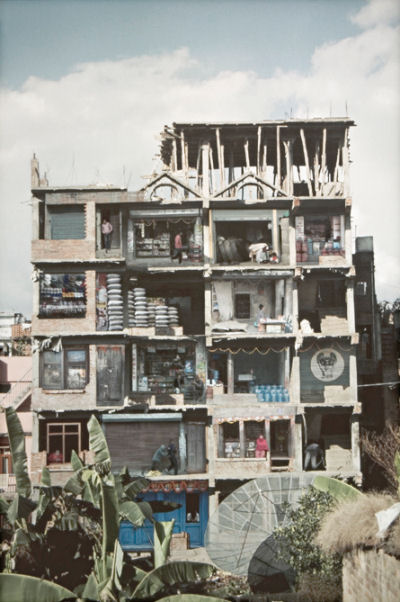
Sam Shmith To Reach Gold, Snap Happy 5 - 28 July, 2007 "He's not using the camera to capture the world, he's building his own"� Les Walking, Media Arts Program Director, RMIT University The exhibition To Reach Gold, Snap Happy has behind it an image bank of some 8,000 photographs taken in 2005 over a period of five months. The artist trekked through the Himalaya in Nepal, then drove a Volkswagen Transporter through Western and Eastern Europe all the while photographing everything he was instinctively drawn to. From the scenery he extracted everything from skies, trees, poles, signs, people, vehicles, mid-grounds, facades, animals, walls, pavements to bricks and mortar. No shot was composed, no image was off-limits and no regard was had to whether a particular shot met the traditional requirements of a 'good' photograph. Rather Shmith used photography to literally break the world up into objects. He describes these earlier photographs as his 'fish sauce'. "They are ingredients. Fish sauce on its own is not terribly enjoyable, but blend it into a green curry and it works wonders."� For Shmith the images captured on camera are simply the starting point for his works. "The photographs in my 'image bank' form the palette from which I paint my landscapes. Though the physical medium is photographic, painting is what I find to be the most suitable description of the actual processes involved in creating the works." Shmith constructs his landscapes using Photoshop; digitally cutting and pasting a collage of chosen elements from earlier photographs. Close attention is paid to defining the light source in the landscape, creating an overall mood and presenting a convincing scene. The landscapes on closer inspection are not designed to fool anyone. If anything, they have been left deliberately imperfect. Some walls don't quite join up to the building next door, some pixels are a little more obvious than others and, overall, the scale is just a little off. Ideally the artist wants people to approach these places knowing that they're not real, but still wondering if perhaps they might be. Awkwardly sitting on the line between the real and the surreal, the painted and the photographed. Shmith's unapologetically romantic pictures gently remind the viewer of the sublime - the constant, though not always obvious, presence of something which dwarves our existence and makes very clear how small we are. The works are richly connected with notions of vastness; our engagement with the world being all at once overwhelming, frightening and at the same time very beautiful. The title of the exhibition is an anagram formed from the words 'Landscape Photography' but describes Shmith's intent and process well- he is seeking a sublime landscape and constructs it from a mass of photographs he has taken. This is particularly apt given the works themselves are a kind of visual anagram- pictures cropped and re-assembled to form other pictures.
Exhibitions
To Reach Gold, Snap Happy - 2007
Sam ShmithTo Reach Gold, Snap Happy 5 - 28 July, 2007 "He's not using the camera to capture the world, he's building his own"� Les Walking, Media Arts Program Director, RMIT University The exhibition To Reach Gold, Snap Happy has behind it an image bank of some 8,000 photographs taken in 2005 over a period of five months. The artist trekked through the Himalaya in Nepal, then drove a Volkswagen Transporter through Western and Eastern Europe all the while photographing everything he was instinctively drawn to. From the scenery he extracted everything from skies, trees, poles, signs, people, vehicles, mid-grounds, facades, animals, walls, pavements to bricks and mortar. No shot was composed, no image was off-limits and no regard was had to whether a particular shot met the traditional requirements of a 'good' photograph. Rather Shmith used photography to literally break the world up into objects. He describes these earlier photographs as his 'fish sauce'. "They are ingredients. Fish sauce on its own is not terribly enjoyable, but blend it into a green curry and it works wonders."� For Shmith the images captured on camera are simply the starting point for his works. "The photographs in my 'image bank' form the palette from which I paint my landscapes. Though the physical medium is photographic, painting is what I find to be the most suitable description of the actual processes involved in creating the works." Shmith constructs his landscapes using Photoshop; digitally cutting and pasting a collage of chosen elements from earlier photographs. Close attention is paid to defining the light source in the landscape, creating an overall mood and presenting a convincing scene. The landscapes on closer inspection are not designed to fool anyone. If anything, they have been left deliberately imperfect. Some walls don't quite join up to the building next door, some pixels are a little more obvious than others and, overall, the scale is just a little off. Ideally the artist wants people to approach these places knowing that they're not real, but still wondering if perhaps they might be. Awkwardly sitting on the line between the real and the surreal, the painted and the photographed. Shmith's unapologetically romantic pictures gently remind the viewer of the sublime - the constant, though not always obvious, presence of something which dwarves our existence and makes very clear how small we are. The works are richly connected with notions of vastness; our engagement with the world being all at once overwhelming, frightening and at the same time very beautiful. The title of the exhibition is an anagram formed from the words 'Landscape Photography' but describes Shmith's intent and process well- he is seeking a sublime landscape and constructs it from a mass of photographs he has taken. This is particularly apt given the works themselves are a kind of visual anagram- pictures cropped and re-assembled to form other pictures.
This site requires Flash 9. If you are seeing this, you'll need to update your player before entering.
Click here to update.